Thursday, 23 July 2015

Farm's nutrient run-off management leads to national award

John and Catherine Ford from Rotorua are the proud winners of the National Ballance Farm Environment Award this year, the first North Island and first sheep and cattle property to achieve that honour.

The Fords own the 1240ha Highlands Station, a hill-country farm sitting within the Lake Tarawera and Rotokakahi catchments and covered in phosphate-rich mud. The Fords say the careful and responsible management of nutrient runoff is one of the most critical farm issues to get right. They have a network of almost 200 retention dams that reduce runoff and scouring during heavy rainfall.

Last year the farm's scheme was tested by the biggest rainfall in 10 years. The dams held the water in the upper catchments and were effective in retaining water and reducing sediment loss.

John was a very active participant in Motu’s AgDialogue group and prior to that in the Lake Rotorua Dialogue group. He stars in the water quality films made in 2012 about the complexities of the Lake Rotorua catchment.

Part of the prize is a study trip overseas. The Fords are considering looking at some sensitive catchments in North America such as Wisconsin and the Chesapeake Bay or Great Lakes catchments.

Thursday, 4 December 2014

Betting the farm on it – how rural land use (may) change with recent commodity prices and land sales

By Zack Dorner

Farming is a risky business, as is forestry. You are at the whim of the weather and international commodity prices which, as we have been reminded by recent dairy prices, can drop rapidly without much warning. Meanwhile, farmers have to make long term decisions about capital investments, or decide whether to convert from one type of a farm to another. Foresters must plant trees which won’t pay off for several decades. Given the importance of rural land use for New Zealand’s economy and environment, it is important that we understand better how land use changes in response to economic drivers.

For my honours thesis last year I decided to look into recent rural land use changes in New Zealand and whether changes may be associated with recent commodity prices and land sales. I’m very happy that my thesis has now taken the form of a Motu Working paper, which has just been released. In lieu of you having to read the full paper (though of course I encourage you to do so!), here is a quick summary of some things I learnt along the way.

Monday, 15 September 2014

Land use models do work (at least sort of)

By Corey Allan and Suzi Kerr

Land-use models are used to explore possible futures, anticipate and diagnose problems, and simulate the effects of different policies. ‘All models are wrong but some are useful’ and more carefully developed and rigorously tested models are more useful. If you are interested in how land-use models are and should be used, our recent paper on land-use modelling provides a non-technical overview of the land-use models currently used in New Zealand. 

If you are interested in the more nitty-gritty detail of modelling, Motu has recently released a working paper that documents and validates the Land Use in Rural New Zealand (LURNZ) model. LURNZ is used to simulate the impacts of climate change policies (such as the inclusion of agriculture in the NZ ETS) on rural land use in New Zealand. The paper tests the projections of the model against reality.  The Land Use in Rural New Zealand model (LURNZ) is based on a heuristic model of dynamic land-use optimisation with conversion costs. It allocates land-use changes to each pixel using a combination of pixel probabilities in a deterministic algorithm and calibration to national-level changes. We simulated land-use change out of sample between 2002 and 2008 and compared the simulated changes to observed land-use change. We show that the allocation algorithm assigns changes in land use to pixels with similar characteristics to those where land-use changes are observed. We also show there is a strong positive relationship between actual territorial-authority-level dairy changes and simulated changes in dairy area. As a result of the model construction, we underestimate the “churn” in land use. You can see the most recent simulations from the model on the LURNZ website.


Thursday, 19 June 2014

Food and beverage industry must act on climate change

By Sarah Meads, Senior Policy Advisor, Oxfam New Zealand

The world is dangerously unprepared for climate impacts on food - yet food companies are major contributors to greenhouse gas emissions and deforestation. Here Sarah Meads explains why food and beverage companies need to clean up their act. 

What has climate change got to do with food and beverage companies? In brief, agriculture and deforestation (largely driven by the expansion of agricultural land) are responsible for around 25% of global emissions. At the same time, climate change presents a major risk to food supply chains and ultimately to the profitability of the 10 biggest food and beverage companies and to the food industry worldwide. 

Oxfam’s new report, Standing on the Sidelines: Why the food and beverage companies must do more to tackle climate change, calls on food and beverage companies to dramatically step up action on climate change by using their influence to reduce agricultural emissions and to emerge as leaders by speaking out on the need for climate action from other industries and governments.

The “Big 10” global food and beverage companies (Associated British Foods, Coca-Cola, Danone, General Mills, Kellogg, Mars, Mondelez International, Nestlé, PepsiCo and Unilever) are both highly vulnerable to climate change and major contributors to the problem. If the ‘Big 10’ was a single country, their combined greenhouse gas emissions would make them the 25th most polluting in the world – and yet they’re not doing nearly enough to tackle it.

The report is part of Oxfam’s “Behind the Brands” campaign looking at the social and environmental policies of the world’s biggest ten food and beverage companies. Previous “Behind the Brands” campaigns have convinced some of the biggest food companies on the planet to adopt stronger policies against land grabs and to improve women’s rights.

Climate change is damaging food production

The Intergovernmental Panel on Climate Change (IPCC) recently warned that climate change will lead to declines in global agricultural yields of up to 2 per cent each decade. At the same time demand for food is expected to rise by 14% percent over the same period – hitting harder and sooner on global hunger than previously thought. It also warns of higher and more volatile food prices - Oxfam estimates world cereal prices could double by 2030, with half of this rise driven by climate change.

The IPCC also warned of reaching a global temperature threshold of three to four degrees, beyond which there will be little we can do to avoid severe damage to food production in many areas of our world. Above this threshold we could face runaway food crises. We are currently on track to cross this threshold in the second half of this century. 

Food price volatility not only hits poor households in developed countries, it can lead to riots in poorer countries, triggering insecurity and more volatile markets that affect us all. The global food industry, including in New Zealand, cannot afford to be complacent on tackling climate change by assuming global markets will be business-as-usual by 2030 in its analysis of global climate change impacts on food production.  

The cost of inaction is now greater than action

In April 2014, Paul Polman, CEO of Unilever, spoke out about the need for action on climate change, stating that, "the cost of inaction is now greater than the cost of action: in the last decade, the world spent $2.7 trillion [NZD$3.21 trillion] more on natural disasters than usual; the same disasters are costing Unilever around €300 million [NZD$485 million] a year." Climate change is already costing these companies vast sums of money. Oxfam’s report is a call to reason; a demonstration that tackling climate change is in everyone’s interest.

There is still time to fix the problem. What companies and governments do today to prepare for climate change – and the degree to which the poorest countries are supported – will, to a large extent, determine the sustainability and profitability of the food industry as well as how many people go hungry over the next two decades. And how far and fast companies and governments cut their emissions will determine whether our food systems can continue to support us in the second half of the century.

Read the full report here: http://www.oxfam.org.nz/reports/standing-sidelines-why-food-and-beverage-companies-must-do-more-tackle-climate-change

Note: This blog was also published on Motu's blog "New Zealand's Low-Emission Future."

Wednesday, 16 April 2014

Z Energy Biodiesel Press Release

This post is syndicated from Motu’s new Shaping New Zealand’s Low-Emission future blog

By Luke Harrington

press release by Z Energy on 3rd April 2014 marks the next step in alternative fuel developments in New Zealand. CEO Mike Bennetts announced a plan to invest $21 million toward a biodiesel manufacturing plant in Auckland, with a particular focus on tallow as the organic derivative of choice. Previous large-scale biofuel generation schemes have been met with varying levels of success in New Zealand (particularly the foray by Solid Energy in 2007) - this is actually acknowledged by Bennetts in the statement. Though this latest proposed operation will only make a small dent in the goliath that is fossil fuel demands for domestic transport, it is a promising step in the right direction – Z should be applauded for taking a leadership role in such an area.

The key ingredient to this proposal is the utilisation of tallow in the biodiesel production process. In essence, tallow is a rendered form of beef or mutton fat, and simply a by-product of the meat slaughter process.  Like the use of woody waste biomass to meet the energy demands of the industrial sector, this method of utilising a by-product is a great way of maximising the efficiency of current industrial operations. In my opinion, such an initiative is analogous to car pooling in a city centre; a great way to reduce emissions without any detrimental trade-offs. 

A key issue has afflicted the large scale production of biofuel in the past: feedstock crops would be grown on land that could otherwise provide food, leading to food supply reductions, price rises, increased pressure to clear land and higher rates of deforestation. Such problems are not applicable in this circumstance, which is fantastic. Motu was also involved in Scion research in 2009 on the potential for producing biofuel from wood – this technology is still evolving.  

In the press release, Bennetts suggests the company will look to incorporate the biodiesel as five to twenty per cent blends, and some commercial customers have already expressed interest to take volume from Z’s initial production outputs. As of 2009, approximately 150,000 tonnes of tallow were produced annually in New Zealand, and could be converted easily and economically into high quality biodiesel (von Tunzelman, 2009). The 20 million litres of annual production proposed by the Z initiative will contribute only 0.5% to the estimated 4 billion litres of diesel used in New Zealand each year (MED estimates, 2013). However, it represents an important first step in encroaching on the high carbon emissions attributed to vehicle transport in New Zealand.

I am interested to see the energy requirements associated with the biodiesel production process. In order for this type of operation to be beneficial in the long term, the energy demands (and associated emissions) at the processing plant cannot exceed the benefits from using less mineral diesel. These numbers are not yet available, owing to the early stages of the project, but needs to remain a consideration. Furthermore, the economic impacts of the production process should not make the biodiesel too expensive for consumers to actually want to buy – it is estimated that a five per cent blend will increase the price by less than 2 cents a litre. Given that only commercial operators are the target consumers in the medium term, I don’t think this is a significant issue right now.

All in all, this initiative represents a positive step by a member of the transport industry – one that demonstrates the innovation and forethought needed by all stakeholders to help reduce our collective emissions profile.

Tuesday, 28 January 2014

Food and Greenhouse Gases: Climate change, agricultural production and food demand.

Post written by C.Will

Our recent blogs have been discussing food security, and the role agricultural production has to play in ensuring a sustainable future. Below are two recently published papers that incorporate the effects of climate change into this discussion.

“Climate change effects on agriculture: Economic responses to biophysical shocks”. By Nelson et al. 2013. Published in Proceedings of the National Academy of Sciences (PNAS).

Abstract:
“Agricultural production is sensitive to weather and thus directly affected by climate change. Plausible estimates of these climate change impacts require combined use of climate, crop, and economic models. Results from previous studies vary substantially due to differences in models, scenarios, and data. This paper is part of a collective effort to systematically integrate these three types of models. We focus on the economic component of the assessment, investigating how nine global economic models of agriculture represent endogenous responses to seven standardized climate change scenarios produced by two climate and five crop models. These responses include adjustments in yields, area, consumption, and international trade. We apply biophysical shocks derived from the Intergovernmental Panel on Climate Change’s representative concentration pathway with end-of-century radiative forcing of 8.5 W/m2. The mean biophysical yield effect with no incremental CO2 fertilization is a 17% reduction globally by 2050 relative to a scenario with unchanging climate. Endogenous economic responses reduce yield loss to 11%, increase area of major crops by 11%, and reduce consumption by 3%. Agricultural production, cropland area, trade, and prices show the greatest degree of variability in response to climate change, and consumption the lowest. The sources of these differences include model structure and specification; in particular, model assumptions about ease of land use conversion, intensification, and trade. This study identifies where models disagree on the relative responses to climate shocks and highlights research activities needed to improve the representation of agricultural adaptation responses to climate change.”

“The future of food demand: understanding differences in global economic models”. By Valin et al. 2013. Published in Agricultural Economics.

Abstract:
“Understanding the capacity of agricultural systems to feed the world population under climate change requires projecting future food demand. This article reviews demand modeling approaches from 10 global economic models participating in the Agricultural Model Intercomparison and Improvement Project (AgMIP). We compare food demand projections in 2050 for various regions and agricultural products under harmonized scenarios of socioeconomic development, climate change, and bioenergy expansion. In the reference scenario (SSP2), food demand increases by 59–98% between 2005 and 2050, slightly higher than the most recent FAO projection of 54% from 2005/2007. The range of results is large, in particular for animal calories (between 61% and 144%), caused by differences in demand systems specifications, and in income and price elasticities. The results are more sensitive to socioeconomic assumptions than to climate change or bio-energy scenarios. When considering a world with higher population and lower economic growth (SSP3), consumption per capita drops on average by 9% for crops and 18% for livestock. The maximum effect of climate change on calorie availability is −6% at the global level, and the effect of bio-fuel production on calorie availability is even smaller.”

Monday, 27 January 2014

Food and Greenhouse Gases: Emissions Intensity of Nutrition Sources

Post written by C.Will

New research published in Nature Climate Change argues that reducing the number of ruminant livestock, especially cattle, could significantly reduce greenhouse gas (GHG) emissions.  They find the GHG emissions from ruminants are 19-48 times higher than emissions from high protein foods obtained from plants. This comparison is based on full life cycle analysis including both direct and indirect environmental effects from ‘farm to fork’ (enteric fermentation, manure, feed, fertilizer, processing, transportation and land-use change are considered).

This offers a compelling argument for significantly reducing our consumption of animal protein to reduce our GHG emissions. However, it is important to consider the nutritional differences between animal protein and high protein foods obtained from plants.

A previous blog of ours discussed studies that look into the debate about GHG emissions from animal protein products and the nutritional difference between animal protein and other high protein sources. To get a comparable amount of energy from fruit and vegetables, larger portions are needed because animal protein products are a rich source of energy. Therefore, when comparing animal protein products and fruit and vegetables on a measure of GHG emissions per unit of energy (in kilocalories), the difference is much smaller.

The problem is complicated and the solution is not clear, but it is important to understand that the food choices we make as individuals do have an impact on the environment. Together we can improve the food security problem by making better informed decisions about our consumption.

Tuesday, 21 January 2014

Food and Greenhouse Gases: An Ominous Future?

Post written by C. Will

In a world increasing in population and wealth, food production needs to be steadily increasing to meet the growing demand. However, a recent study in Nature Communications (discussed here) argues the rate of yield gains in wheat and rice production have plateaued, despite increased investment in R&D and education. Other studies (for example Ray et al. (2013)) have also found evidence that the current yield gain in major crops is insufficient to reach the estimated 60% increase in production required by 2050. If wheat and rice production have approached a yield ceiling it provides an ominous future for food security.

Previous increases in yield gain have been driven by investment in technologies that were largely one-time innovations and cannot be repeated. For example, innovations in genetically modified grains, major investment in irrigation infrastructure and increased use of fertilisers and pesticides saw steady increases in grain production.

Is livestock agriculture also at risk of approaching a yield ceiling?
New Zealand has experienced significant annual increases in livestock productivity for more than 20 years.  As we discussed in a previous post even with existing technology there is room for significant ongoing improvement as less efficient farmers catch up with those who are more efficient. In the short term, constraints on yield per hectare (intensity) are likely to be environmental (water quantity and quality) rather than technological (as noted by the Parliamentary Commissioner for the Environment’s report on water quality). Internationally, the enormous differences in livestock productivity suggested by differences in emissions per unit of output suggest space for considerable yield gains.  

Globally we need to be making all the efficiency gains that we can to resolve the food security problem and New Zealand has an important role to play in this through the livestock sector.

Wednesday, 18 December 2013

An Economist’s Perspective on Value

Post written by C. Will

Motu has just released a Note on “Value and Natural Capital: Examining the Economist’s Perspective” written by Josh Pemberton and Suzi Kerr. The paper considers what economics brings to a conversation about environmental value, and what the limits of its contribution might be.

Many of you will have experienced how different people can view the same problem or issue in various ways. With this in mind, this paper seeks to highlight and examine the assumptions and implicit goals that underpin the way in which economists think about value in general, and environmental value in particular. 

FAO Report

Post written by C. Will

New Zealand (NZ) has relatively low emissions per unit of dairy production. So can NZ farmers share the skills and technologies that allow such low emissions to help lower global greenhouse gas (GHG) emissions?

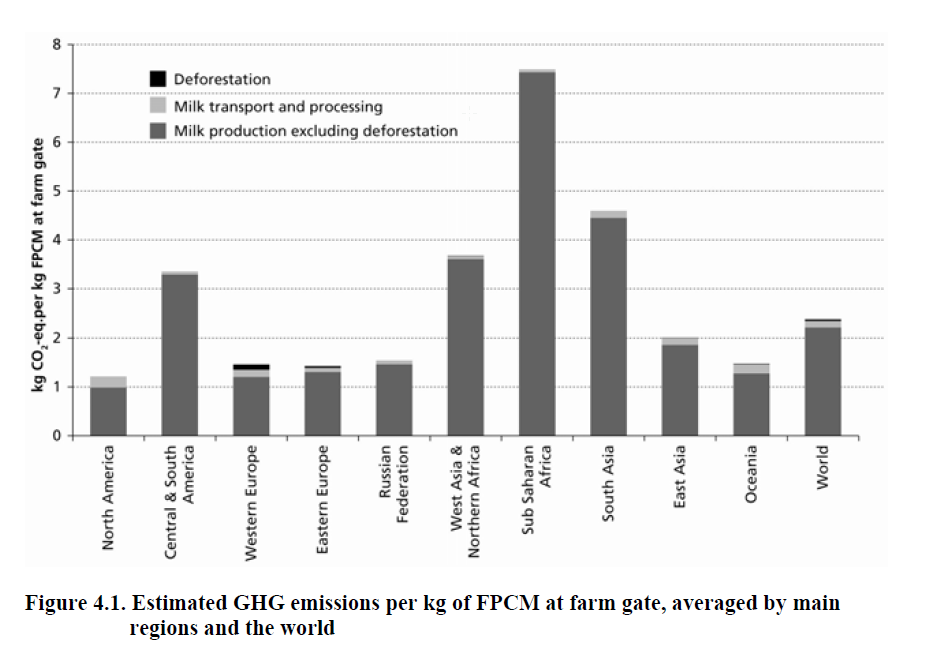
The Food and Agricultural Organization (FAO) released a report in 2010 that looked into GHG emissions from the global dairy sector. Although the report is from 2010, it has some interesting findings worth discussing. In particular, a comparison of GHG emissions per kg of Fat and Protein Corrected Milk (FPCM) across different regions (see graph below).


Source: Gerber, P., Vellinga, T., Opio, C., Henderson, B., & Steinfeld, H. (2010). Greenhouse Gas Emissions from the Dairy Sector, A Life Cycle Assessment. FAO Food and Agriculture Organisation of the United Nations. Animal Production and Health Division, Rome. Page 34.


FPCM is a way of comparing milk produced from different dairy animals on a common basis by equating the level of fat and protein in the milk. The graph highlights where milk production is the most GHG emissions intensive and therefore the least efficient. There is a clear trend showing developing regions (Africa and Asia) having higher emissions than more industrialized regions (Europe and North America). 

We have been told that NZ emissions are even lower than the rest of Oceania; approximately 0.9 per kg of FPCM. This gives an idea how efficient NZ farming is and supports a comment in a previous blog that touched on the difference in efficiency between NZ farmers and farming in Africa. 


Monday, 16 December 2013

Thin Ice

Post Written by C. Will

Thin Ice is a New Zealand created movie that follows Simon Lamb (Victoria University of Wellington) as he travels around the world meeting the scientists behind climate change. The film is intended to help people develop a better understanding of climate change. The film also gives an introduction to the most recent Intergovernmental Panel on Climate Change (IPCC) Assessment Report.

Friday, 13 December 2013

Livestock: The answer, not the problem?


Post written by C. Will

Seth Itzkan of Planet-TECH discusses how holistic management can restore grass lands and reverse the effects of climate change in his TEDx talk; “How global warming can be mitigated through holistic management”.


In the video, Seth discusses his experiences in Zimbabwe and how the village herders have changed the way they manage their livestock. Using holistic management, they have replenished grasslands and during the dry season surface water is occurring further upstream than before. Increased availability of surface water has made farming easier and removed the need for water pumps, saving money. Regenerating grasslands also increases soil sequestration, reducing the amount of carbon in the atmosphere.

Holistic management uses livestock in a way that mimics wild herds which were a key component in the ecosystem when grasslands thrived. The wild herds would graze, naturally process the grass, fertilise the ground and then move onto a new area. The villagers are now replicating this process by running livestock in dense packs and moving them regularly just as a wild herd would. They also stick to grazing plans to prevent over grazing.         

Although his focus is on environments that have suffered desertification (the transformation of habitable land to desert), parallels can be made between the framework of holistic management and the way farmers in New Zealand manage their stock. Relative to farmers in Africa though, New Zealand farmers have lower emissions per unit of production and are more efficient. However, even in New Zealand many farmers can apply management strategies other farmers are already using to reduce their environmental impact. A recent Motu working paper, looks at such mitigation possibilities.

Holistic management was a way of managing resources originally developed by Allan Savory. Here Allan offers further discussion on holistic management and “how to fight desertification and reverse climate change”.


Saturday, 9 November 2013

A Negotiator’s Perspective: the Future of Agriculture in the UNFCCC Negotiations


Post written by H. Griffin.

With this year’s annual international climate change (UNFCCC) negotiations kicking off in Warsaw on Monday, now is a good time to look at agriculture’s place in the negotiations and where things might be headed in the future. 

Due in part to socio-economic and food security issues, progress in agricultural negotiations within the UNFCCC has been very slow. This is because of the role agriculture plays as a source of employment for many of the world’s poor, and the fact that many developing countries have had recent experiences of drought induced famine.

A new agreement is currently being negotiated and is expected to come into force in 2020 at the end of the Kyoto Protocol’s second commitment period. Whilst the Kyoto Protocol placed mitigation obligations on industrialised nations, the post-2020 agreement will be applicable to all nations. The negotiations are currently in a phase of design and preparation for the post-2020 agreement. It is particularly important that progress on mitigation and adaptation in the agricultural sector is made in preparation for the next agreement.

To give us a better idea about what is going on in the negotiations, Paul Melville from the Ministry for Primary Industries has kindly agreed to be interviewed for this blog. Paul is in Warsaw with the New Zealand government delegation as a negotiator in the area of agriculture.

Q. What is New Zealand hoping to achieve in relation to agriculture at the negotiations in Warsaw?

A. The discussions on Agriculture had a breakthrough at the inter-sessional meeting in Bonn this year. After many years of inconclusive negotiations, Parties agreed to a submission and workshop process as a first step of SBSTA (Subsidiary Body for Scientific and Technological Advice) work on Agriculture. This will be a useful opportunity for Parties to share experiences and lessons learned on agricultural adaptation and adaptation co-benefits. This workshop should facilitate more focussed negotiations on agriculture at Warsaw and future SBSTA sessions.

A successful work programme would aim to provide the UNFCCC with detailed scientific advice on issues relating to agriculture. One workshop will however unlikely deliver this. Though, it is often said that the hardest part of any process is taking the first step. The challenge for COP19/Warsaw is to ensure that Bonn was the first step in a wider process by continuing and building upon this work. If Warsaw was to fail to continue the progress made in Bonn we risk falling back into the previous pattern.

Q. What role can New Zealand play, both within and outside of the negotiations?

A. New Zealand likes to be a flexible thought leader wherever possible, piloting new ideas and working with a broad range of countries. We have expertise and a particular interest in issues related to agriculture, forestry and carbon markets.

Q. How is domestic policy in New Zealand relating to agricultural GHG emissions influenced by the international context?

A. There is a two-way relationship between domestic and international policy: domestic policy in New Zealand influences New Zealand’s international position; and international policy has an influence on New Zealand’s domestic policy.

While there is an influence in both directions, the two remain different. We promote international rules and commitments that are suitable for New Zealand’s domestic circumstances; and once agreed we implement commitments and rules using policies and measures that best suit our domestic policy environment.

Q. In your opinion, what would be the best outcome for agriculture in the post-2020 agreement?

A. The agricultural sector faces unique challenges. Agriculture is responsible for approximately 10–12 percent of global greenhouse gas emissions and is also an extremely vulnerable sector to the impacts of climate change. In addition to the challenge of having to simultaneously manage greenhouse gas emissions while adapting to climate change, it is forecast by the FAO that global agriculture will be required to increase production by 70 percent by 2050 to meet rising demand.

Outlining a best outcome for agriculture is difficult at this early stage of the negotiations as we are still working collectively in the UNFCCC on the design of the post-2020 agreement. However, by focusing on what we do know we can begin to understand what a good outcome for agriculture could look like.

We know the post-2020 agreement will include measures that will be ‘applicable to all’ Parties. We assume it will include, amongst other things, mitigation, adaptation and finance. We know that agricultural systems, including considerations of capacity, scale, culture, environment, efficiency and productivity are extremely varied, and it will probably not be possible to design a one size fits all rule set.

Therefore, in order to remain applicable to all, a key feature of any treatment of agriculture will be a need to adopt an approach with sufficient flexibility to cater for this broad range of national circumstances. In this sense, although agriculture has its own unique features, the broad principle of ensuring Parties are able to take commitments consistent with their specific national circumstances remains relevant here, too. New Zealand has outlined a concept of ‘Bounded Flexibility’ in a number of fora including the below submission which builds on this idea of a flexible framework.

http://unfccc.int/files/documentation/submissions_from_parties/adp/application/pdf/adp_new_zealand_workstream_1_20131015.pdf

Beyond outlining that any treatment will need to be sufficiently flexible to cater for national circumstances, it is very hard to predict or prescribe outcomes for a post-2020 agreement at this early stage.


About Paul:
I am a Senior Policy Analyst in the Ministry for Primary Industries International Policy Team. Our team covers environmental policy related to forestry or agriculture. In addition to agriculture in the UNFCCC, I also have responsibilities related to common metrics in the UNFCCC (global warming potentials), environmental footprinting policy and carbon footprinting policy. Prior to working for MPI I was a member of Fonterra’s Sustainability team. While at university and high school I paid my bills by milking cows and operating a successful calf rearing business on my parent’s dairy farm near Te Awamutu.

Wednesday, 6 November 2013

New Motu Working Paper Shows Significant Potential for Better Farm Management Practices to Improve Environmental Outcomes


Post written by H. Griffin.

This new working paper looks at differences in management practices of New Zealand dairy farms and the mitigation of nitrogen leaching and greenhouse gas emissions. Research on this topic in New Zealand to date has relied on simulation modelling and has been limited by the fact that different farms have generally been treated as homogenous. In reality, farms vary greatly – looking at this heterogeneity gives a better idea of the potential for better environmental outcomes through more efficient farm management practices.

Using data on 264 New Zealand dairy farms, the paper estimates the extent to which farm management and farmer skill could potentially reduce farms’ greenhouse gas emissions and nitrogen leaching per unit of production. It suggests that significant feasible, relatively low-cost mitigation could be effected by less efficient farmers moving towards existing best practice, potentially reducing nitrogen leaching by more than 30 percent and greenhouse gas emissions by more than 15 percent. The potential for such mitigation varies considerably across farms.

Check out the new paper here.

Thursday, 24 October 2013

New OECD Report: Policy Instruments for Green Growth in Agriculture

Post written by H. Griffin.

An OECD Green Growth report on agricultural policy instruments was released on Monday. The report synthesises the experience of OECD countries in developing and implementing green growth policies in the agricultural sector. In addition to looking at experience in the areas of improved resource-use efficiency and decreased local environmental impact, the report explores policy potential to reduce greenhouse gas emissions. A key conclusion of the report is that whilst a wide range of policies are being used throughout the OECD, the degree of ambition is extremely variable between countries.

Check out the full report here.

Monday, 14 October 2013

Effluent to Biofuel

Effluent processing plants that turn dairy cow effluent into biofuel could be the way of the future for New Zealand dairying.

Agribusiness manager Natasha King, winner of the Nuffield Farming Scholarship, has done research into whether gas and electricity can be generated from effluent. Whilst unable to reveal details about the proposed solution just yet, plans are underway to trial effluent processing on a 1000-cow farm in Canterbury.

Friday, 4 October 2013

Reframing the Policy Approach: Lessons from Niki Harré


Post written by H. Griffin.

Niki Harré’s Psychology for a Better World explores how we can create a society in which governments, organisations and individuals take pride in their efforts to protect the planet and each other. In the video below, Harré summarises the key messages of her book.

In a previous post, we looked at how individual environmental action can be motivated. Harré’s work is not only relevant to individuals, but also to policy-makers. The design and implementation of policy can have a huge impact on its effectiveness. Harré highlights the importance of positivity in encouraging creativity and cooperation. Positive emotions also play a vital role in facilitating behavioural change.

Framing the way agricultural greenhouse gas emissions are addressed in a more positive manner could be very beneficial. Approximately half of New Zealand’s greenhouse gas emissions relate to agriculture. The mitigation of these emissions is particularly challenging because current mitigation options are mostly associated with farm management practices and must be implemented by tens of thousands of farmers. There are currently no ‘silver bullet’ technologies that can be imposed or implemented by agricultural processing/distribution companies on behalf of farmers. Furthermore, incorporating agriculture into the ETS – which has been the focus of public debate – risks generating large wealth transfers. Because of this, it is crucial that communication of the issue is productive in facilitating positive action.
 

Political debate on the issue so far has been polarised, negative and unproductive. Harré shows us that reframing the policy conversation could potentially better equip New Zealand’s agricultural sector to face the challenges ahead.

As explored in this Motu note, New Zealand can play an important role in global climate change mitigation efforts as a policy leader. Positively reframing our policy debate domestically is an important step in enabling New Zealand to play this role.

 Instead of tales of terror, we need to be telling tales of joy. We also need to be designing policy that facilitates the acknowledgement of positive behaviour of farmers. Harré suggests that making positive behaviour more visible to other farmers could have multiplying effects as people tend to copy each other.


Thursday, 5 September 2013

100% Perception: DCDs and our International Image


Post written by Hannah Griffin


The recent food safety controversies involving Fonterra have highlighted the critically important interdependence between NZ’s exporters and our international brand. Further controversy surrounding DCD traces followed by a botulism scare were linked with river water quality in a wide ranging attack by the UK’s Daily Mail, alleging our ‘100% Pure’ slogan was “pure manure”. Whilst some have claimed the 100% Pure line should be taken with a grain of salt, export bans put in place by unaffected countries demonstrates the serious consequences of mishandled communications.

In the past month, bans and suspensions of Fonterra’s products have variously occurred in Russia, Sri Lanka and most recently Bangladesh. Particularly unsettling is Sri Lanka’s focus on DCD residues and Bangladesh’s related “nitrate in the milk powder” concerns.

Regardless of the (disputed) extent to which DCD residues have been detected, it is absolutely essential that we effectively communicate with our trading partners to avoid our brand being unnecessarily tarnished. Although DCD is non-toxic and presents no food-safety risk, many international markets have little to no tolerance of any level of chemical residue in their food - there is no international standard prescribing an acceptable level of DCD.

But why are we using DCD in the first place? DCD (technically ‘Dicyandiamide’) is one of the most promising technologies available for reducing the environmental impact of agriculture - it is the only product recognised under New Zealand’s National Agriculture Greenhouse Gas Inventory as a mitigation tool. This, and its additional effect of reducing the level of Nitrate leaching into our waterways, makes its usage very compelling, from an environmental perspective.


Approximately half of NZ’s emissions relate to agriculture and of these, 20% are related to livestock emissions from nitrous oxide and a further 6% from Nitrogen-heavy fertilisers. Motu and Landcare Research studies have shown that regulating nutrient run-off in water catchments or GHG emissions will generally lead to improvements in both; this is largely driven by changes in land use but also on-farm management decisions. Other, pre-experimental modelling under the Pastoral 21 programme has suggested it may be technically feasible to enact a 30% reduction in N leaching using current technologies even with a 20% increase in production. This suggests that significant nitrous oxide reductions may also be possible.

But do the economics stack up? Since agriculture is not included in the emissions trading scheme, farmers cannot use DCD to directly benefit from the reduction in CO2-e emissions. Positively though, DCD usage can in some circumstances boost pasture production by 5-10% but most studies suggest that its use will still come at a cost to profitability. DairyNZ work suggests that 20% reductions in leaching may be possible on dairy farms in Canterbury, while maintaining farm profitability.

Technological advances in agriculture represent a huge opportunity to increase the sustainability of our farming systems, without compromising food safety. It is essential that we pre-emptively address the potential concerns of our trade partners so as to enhance, rather than jeopardise our clean, green reputation.

Thursday, 15 August 2013

Retracing the Footprints of our Livestock

Post written by H. Griffin

Carbon footprinting has become commonplace these days. Go online and you’ll find articles about the footprint of just about anything – your diet, your travel and even your pets. There are also various calculators available that can figure out the totality of your own personal footprint, if that’s what you so desire.
Footprinting is done for many agricultural products. It enables us to compare and contrast across different countries as well as among products.

AgResearch has put together various footprint studies on New Zealand produce, such as lamb and beef. These studies are important in strengthening our understanding of where emissions could be decreased along the supply chain.

But what actually goes into putting the numbers together?

AgResearch uses a “Life Cycle Assessment” approach, examining greenhouse gas emissions from production to consumption. At each stage of this chain, they assess each component that contributes to emissions. For example, in terms of on-farm beef emissions this means looking at natural processes of cattle consuming pasture as well as fertiliser, electricity and fuel use.

For beef, the total GHG footprint AgResearch calculated was 2.2kg CO2-equivalents for a 100g portion. Broken into segments, this equated to 90.3% for the on-farm stage, 2.1% for meat processing, 4.2% for transportation, and 3.3% for the consumption phase.


Their beef footprint study also outlines next steps for emissions improvements for the industry. Recommendations range from increasing productivity and tree-planting at the farm level to reducing the speed of shipping vessels.

On-farm emissions contribute by far the largest portion of the pie. Natural processes are the main source of these emissions and are the most challenging to mitigate. With the first petri dish grown beef burger eaten just over a week ago, there is a possibility that someday in the distant future we’ll be able to cut on-farm emissions altogether!

In the meantime we can work on minimising emissions where possible. This means taking the opportunities available in every phase from production to consumption. As consumption accounts for 3.3% of beef’s footprint, our behaviour can also play a role in minimising the footprint of what we consume. As consumers we can do things such as reducing food wastage in our homes.

We can also take responsibility for the footprint of our diet. As explored in a previous blog, a shift towards less red meat intensive diets could play a role in this.